
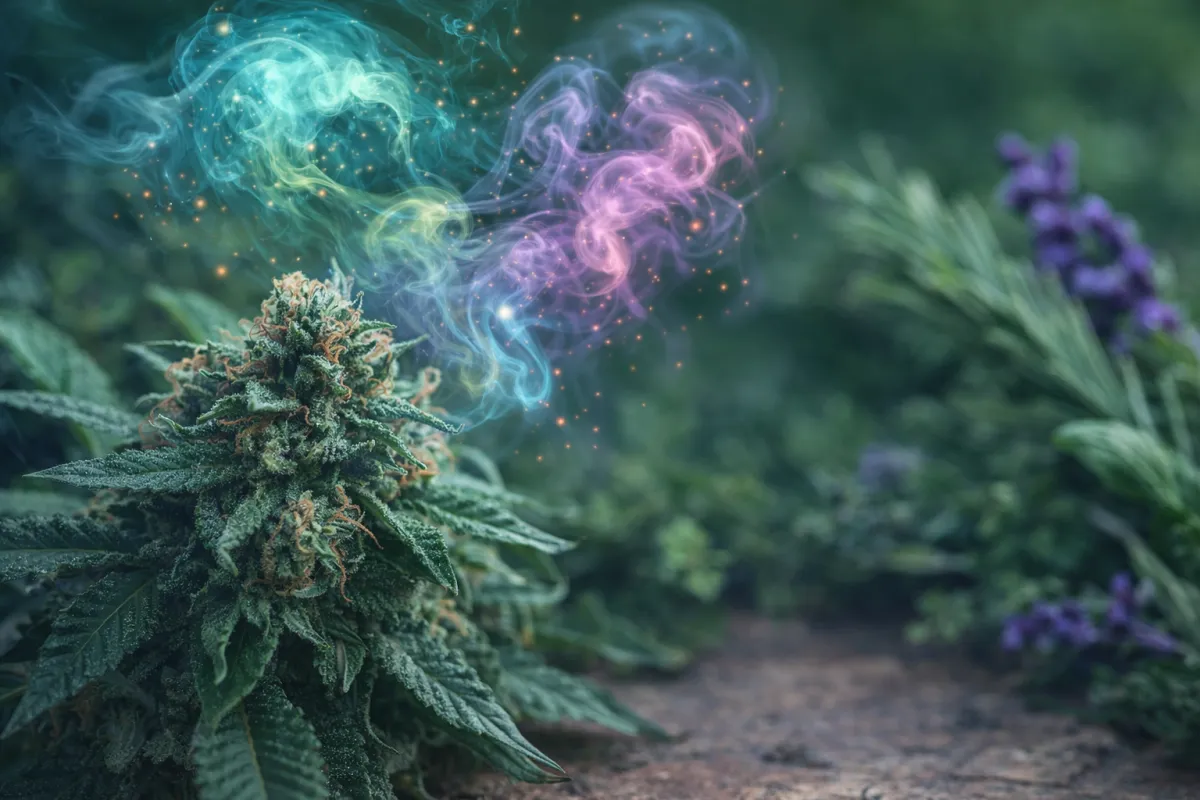
Terpenes: The Unsung Heroes of Your Cannabis Experience
Terpenes: The Unsung Heroes of Your Cannabis Experience
If you've ever stopped and wondered why two cannabis strains with nearly identical THC percentages can feel completely different — one producing mellow relaxation and the other sparking social energy — the answer lies in terpenes.
Terpenes are the aromatic compounds found in cannabis and throughout the natural world. They're responsible for the distinctive scents of lavender, lemons, pine forests, black pepper, and hundreds of other plants. In cannabis, they don't just create the smell and flavor — they actively shape the experience. And yet, they almost never appear on the front of a cannabis label.
This is the guide terpenes deserve. By the time you finish reading, you'll understand why asking "what are the dominant terpenes?" is one of the smartest questions you can ask in a dispensary.
What Exactly Are Terpenes?
Terpenes are a broad class of organic compounds produced by a vast range of plants and some insects. They evolved primarily as chemical defenses — repelling insects, discouraging herbivores, and attracting pollinators. The cannabis plant produces over 200 identified terpenes, making it one of the most terpene-rich plants in the natural world.
In practical terms, terpenes are what you smell when you open a jar of flower. That sharp citrus burst? Limonene. That earthy, musky depth? Myrcene. That clean forest pine? Pinene. Those notes tell you something meaningful about what the product will feel like — not just what it will smell like.
Terpenes are produced in the same glands (trichomes) as cannabinoids, and like cannabinoids, they interact with the body's endocannabinoid system and other receptor systems. This is why terpenes don't merely flavor the cannabis experience — they participate in shaping it.
The Entourage Effect and Why Terpenes Are Central to It
The entourage effect is the scientific principle that cannabis compounds work synergistically — that the combination of cannabinoids and terpenes produces effects that are greater and more nuanced than any single compound could achieve alone. Terpenes are a critical part of this equation.
This is why full-spectrum and whole-plant products — those that preserve the complete terpene and cannabinoid profile of the original plant — are preferred by many experienced consumers. It's also why products made from cannabis distillate (which strips away most terpenes during processing) and then re-infused with isolated terpenes don't always match the complexity of whole-plant products, even when the final terpene percentages look similar on paper.
In short: terpenes matter enormously, and the specific combination of terpenes in a product is one of the most important factors in determining how it will feel and perform.
The Major Cannabis Terpenes: A Complete Guide
Myrcene — The Most Common Cannabis Terpene
Myrcene is the most abundant terpene in most commercial cannabis strains, which makes it one of the most important to understand. It has an earthy, musky, herbal aroma — sometimes described as reminiscent of ripe mangoes or hops (which also contain high concentrations of Myrcene).
Myrcene is associated with relaxing, sedating effects. It's thought to facilitate the transport of cannabinoids across the blood-brain barrier, potentially increasing the intensity of THC's effects when Myrcene is present in high concentrations. Many Indica-leaning strains are high in Myrcene, which helps explain why they tend to produce more physically sedating experiences.
Best for: Relaxation, evening use, unwinding, sleep support.
Also found in: Mangoes, hops, lemongrass, thyme, basil.
Limonene — Citrus Energy and Elevated Mood
If you've ever cracked open a strain and immediately thought "this smells like lemons," you've met Limonene. It's the bright, citrusy terpene found in high concentrations in citrus rinds, peppermint, and juniper — and in many uplifting cannabis strains.
Limonene is associated with mood elevation, stress relief, and energizing effects. It's one of the most researched terpenes for its potential anxiolytic (anti-anxiety) properties, and it's commonly found in strains marketed for daytime or social use. It also has natural antimicrobial properties, which is why it's widely used in cleaning products and cosmetics.
Best for: Mood elevation, energy, social settings, daytime use, stress relief.
Also found in: Lemon peel, orange rind, grapefruit, peppermint.
Linalool — Floral Calm and Gentle Sedation
Linalool is the primary terpene in lavender, and if you've ever noticed that lavender helps you feel calm and sleepy, that's Linalool at work. In cannabis, this floral, slightly spicy terpene is associated with calming, sedating, and anxiety-reducing effects.
Linalool is thought to interact with GABA receptors in the brain — the same receptors targeted by anti-anxiety medications — which may explain its calming properties. It's commonly found in Indica-dominant strains and products designed for stress relief and sleep support.
Best for: Anxiety relief, relaxation, sleep, calming evening use.
Also found in: Lavender, coriander, birch, rosewood, basil.
Pinene — The Clear-Headed Forest
There are two forms of Pinene — alpha-Pinene and beta-Pinene — both of which smell exactly like what their name suggests: pine forests, fresh air, and the outdoors. Pinene is one of the most common terpenes in the natural world, found in pine needles, rosemary, eucalyptus, and many cannabis strains.
Pinene is notable for its potentially memory-enhancing and bronchodilating properties. Some research suggests it may counteract some of THC's short-term memory impairment, which makes Pinene-dominant strains popular among consumers who want the benefits of cannabis without cognitive fog. It's associated with alertness, focus, and a clear-headed quality.
Best for: Focus, mental clarity, daytime use, alert and engaged experiences.
Also found in: Pine needles, rosemary, eucalyptus, dill, parsley.
Caryophyllene — The Only Terpene That's Also a Cannabinoid
Caryophyllene (also called Beta-Caryophyllene or BCP) is unique among terpenes: it's the only terpene that's been shown to directly bind to the CB2 receptors of the endocannabinoid system, which means it functions as both a terpene and a dietary cannabinoid. It has a spicy, peppery, woody aroma — you might recognize it from black pepper, cloves, and cinnamon.
Caryophyllene is one of the most researched terpenes for its anti-inflammatory properties. Its interaction with CB2 receptors (associated with the immune system and inflammation) makes it particularly interesting for consumers seeking cannabis's physical benefits without strong psychoactive effects. It's found in many strains and is associated with relaxing, stress-easing effects.
Best for: Stress relief, relaxation, physical comfort, anti-inflammatory applications.
Also found in: Black pepper, cloves, cinnamon, hops, basil.
Terpinolene — The Complex, Multidimensional One
Terpinolene is a fascinating terpene because it defies easy categorization. Its aroma is complex and layered — simultaneously floral, herbal, piney, and slightly citrusy, with notes that shift as you continue to smell it. It's found in apples, lilacs, tea tree oil, and certain cannabis strains that are particularly beloved for their unique aromatic profiles.
In terms of effects, Terpinolene is associated with uplifting, slightly energizing qualities — similar to Limonene but typically milder and more nuanced. Strains high in Terpinolene are often described as producing a creative, focused, and gently elevated experience. It's somewhat rare as a dominant terpene, which makes strains that feature it stand out on the menu.
Best for: Creativity, gentle energy, daytime use, unique aromatic experiences.
Also found in: Apples, lilac, tea tree, nutmeg, cumin.
Ocimene — Fresh, Sweet, and Herbal
Ocimene has a sweet, herbal, and sometimes slightly fruity aroma — often described as fresh in a way that's hard to pin down. It's associated with uplifting and energizing effects and is found in many tropical and exotic-leaning cannabis strains. Ocimene is less commonly discussed than the terpenes above but is worth recognizing when you encounter it — especially if you notice a strain that smells distinctly fresh and tropical.
Best for: Energy, uplifting mood, creative environments.
Also found in: Mint, parsley, basil, orchids, mangoes.
How to Use Terpene Knowledge When You Shop
Now that you understand what terpenes are and what the major ones do, here's how to apply that knowledge practically when you're browsing a dispensary menu:
1. Look for Lab-Tested Terpene Profiles
At a quality dispensary like Trinity Naturals, most products will include lab-tested terpene data. This tells you which terpenes are present and in what concentrations. The dominant terpenes (the ones present in the highest amounts) will have the greatest influence on the character of the experience.
2. Match Terpenes to Your Desired Outcome
Instead of starting with "what is the highest THC here?" try asking yourself what you're looking for. Relaxation and sleep? Look for high Myrcene and Linalool. Daytime energy and focus? Reach for Limonene, Pinene, or Terpinolene. Stress relief with physical ease? Caryophyllene might be your best friend.
3. Use Aroma as a Guide
Your nose is a surprisingly accurate terpene detector. If a strain smells deeply earthy and you're drawn to it, it's probably high in Myrcene. If it smells bright and citrusy, Limonene is likely dominant. If it smells like a pine forest, Pinene is at work. Trust your instincts — scent and effect are genuinely connected through terpenes.
4. Ask the Team
This is exactly the kind of conversation Trinity Naturals' staff love having. "What are the dominant terpenes in this?" and "Which product in your inventory is highest in Linalool?" are the kinds of questions that help our team help you find exactly what you're looking for. Don't be shy — it's what we're here for.

A Note on Terpene Degradation
Terpenes are volatile compounds — they evaporate more readily than cannabinoids. Proper storage matters enormously for preserving terpene quality. Cannabis should be stored in an airtight container, away from direct light and heat, ideally in a cool and consistent environment. Ground cannabis loses terpenes significantly faster than whole flower, which is why grinding just before use produces a much more flavorful experience.
At licensed dispensaries, products are stored and handled in ways that minimize terpene degradation. When you take cannabis home, treat it with the same care.
Want to explore terpenes hands-on? Come into Trinity Naturals at 270 2nd Street in Chelsea, and ask our team to walk you through the terpene profiles of our current flower and vape inventory. You can also download our Terpenes Guide for a deeper reference — and if you want to compare notes with other cannabis enthusiasts, the Trinity Cannabis Community Portal is the perfect place to share what terpenes you've been enjoying and get recommendations from fellow members.
Terpenes are what transform cannabis from a product into an experience. They're the reason two strains can look nearly identical on paper and feel entirely different in practice. Learning to recognize and seek out specific terpenes based on your goals is one of the most powerful upgrades you can make as a cannabis consumer.
Smell deeply. Choose intentionally. Enjoy the difference.